

Safety, Health & Wellbeing Live / Fire Safety Live Conference Report
10th February 2026
Manchester Central Conference Centre
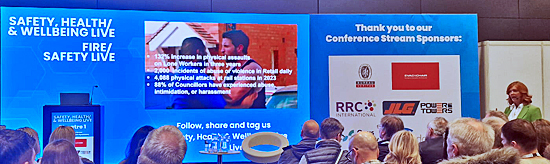
Rik Farnworth, Assistant Secretary, CWU Lancs & Cumbria Branch provides a Trade Union Perspective in his report on this year's conference and the key sessions that he attended:
Overview
 The Safety, Health & Wellbeing Live and Fire Safety Live conference brought together safety professionals, regulators, and industry stakeholders to explore current and emerging challenges in workplace health, safety, and wellbeing. The event placed strong emphasis on prevention of work-related ill health, the role of technology and data, and the changing nature of work, particularly lone and remote working.
Key Sessions Attended and Reflections
1. HSE Keynote: Delivering a Healthy Workforce and a Healthy Economy
The keynote from the Health and Safety Executive set the tone for the day by reinforcing the link between good workplace health and a strong economy. The focus on prevention of ill health, including stress and musculoskeletal disorders, was particularly relevant from a trade union perspective, as these issues disproportionately affect frontline workers.
2. An AI Revolution? – Reflections from a Trade Union Perspective
The session on artificial intelligence, including discussion of the FYLD platform, highlighted the significant potential benefits of AI in improving workplace safety. FYLD appears to be an amazingly useful tool, particularly in reducing unnecessary journeys to worksites, improving hazard identification, and providing innovative safety tools.
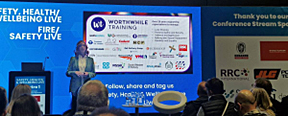 However, as a trade unionist from CWU Lancs & Cumbria Branch, concerns remain around thepotential for surveillance and misuse. Because FYLD is bespoke to each company that pays for it, there is a risk that functionality could extend beyond its intended safety purpose.
A worrying example would be the use of live or recorded footage as a form of active CCTV for disciplinary purposes, such as listening to worker conversations, monitoring language, or enforcing conduct rules unrelated to safety. This reinforces the importance of clear governance, transparency, and robust agreements with unions to ensure such tools are used strictly for safety improvement and not for covert performance management.
3. Storytelling with Data
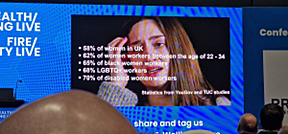 This session was valuable in demonstrating how safety data and reports can be presented in a clear and accessible way. Practical advice included avoiding overly complex visuals, such as pie charts, and instead focusing on formats that are easier for readers to interpret quickly.
A particularly interesting point from the floor highlighted that almost any narrative can be created from large data sets, raising concerns about potential manipulation. From a trade union perspective, this underlines the need for transparency, context, and worker involvement in how data is selected, interpreted, and presented, especially when it may influence policy, investment, or disciplinary decisions.
4. New Risks Around Lone Working
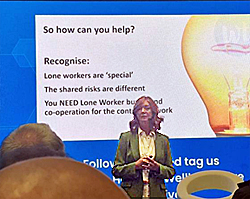 The session on lone working was useful in clearly defining what constitutes a lone worker in modern workplaces, extending beyond traditional field roles to include remote and hybrid workers.
This was particularly relevant given that Openreach members have recently been required to install the People Safe App on their work phones. The discussion helped identify both the pros and cons of such technology. On the positive side, lone worker apps can improve personal safety, provide emergency support, and give reassurance to workers and employers alike. Conversely, concerns remain around data privacy, potential tracking beyond working hours, and whether such tools could be used for monitoring productivity rather than safety.
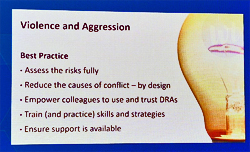 These issues reinforce the need for clear policies, consultation with unions, and assurances that lone worker technology is proportionate and safety-led.
Conclusion
Overall, the conference provided valuable insight into current thinking around workplace health, safety, and wellbeing. From a CWU trade union perspective, the key challenge remains ensuring that new technologies and data-driven approaches are implemented ethically, transparently, and with genuine worker involvement. When used correctly, these tools can significantly improve safety outcomes, but without safeguards they risk undermining trust and worker rights.
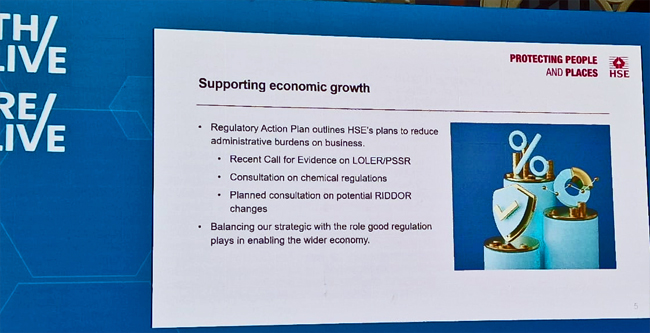
Is this what the HSE was designed for? To be a tool of business?
